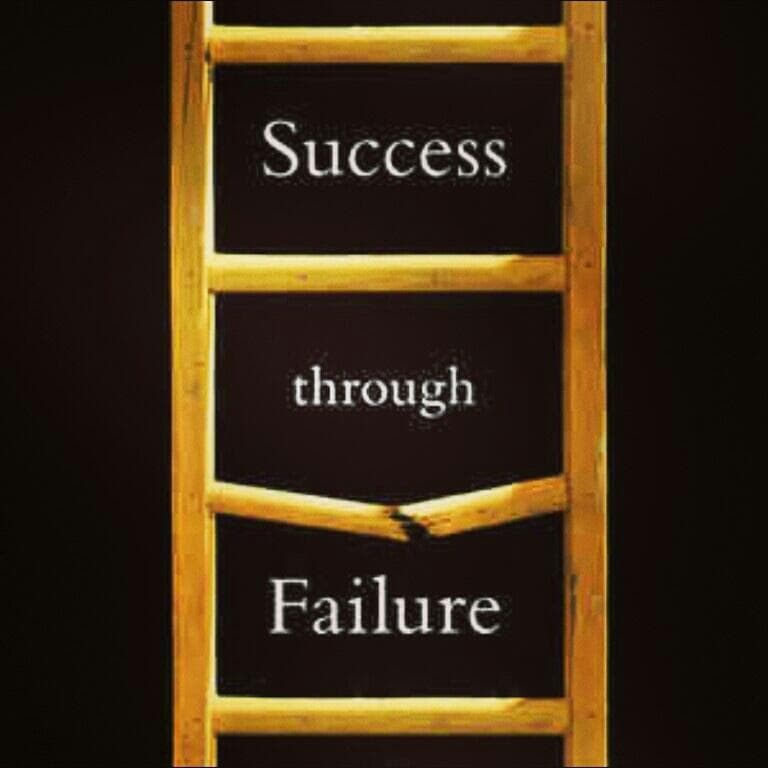
How to Fail the Right Way: Ten Principles for the Innovation Leader
Failure is inevitable in innovative work. The difference between a successful leader and everyone else is how they make failure small, early, safe, and generative.
This post is a translation of the original Arabic article.
In this series on innovation leadership and entrepreneurship, I talked in the previous post about how leaders draw inspiration by living at the intersection of humanity and technology (here).
Today I am talking about the importance of failure for leaders and what their role in it should be.
It is important to know that failure has a positive side: you learn from it. You discover that the path you failed on is a dead end and you should not take it again.
I will not go over the long list of great figures who failed, learned from their mistakes, and then achieved great success. You have heard plenty about them and entrepreneurship books are full of such stories. Some young entrepreneurs have started to boast about dropping out of university instead of channeling their energy into learning, or they boast about repeated failure instead of actually learning from their mistakes.
What I want to talk about is the practical side of failure.
Ten Principles for the Innovation Leader
First: Any innovative work is built on repeated failure and learning from it. But it is equally important to know that once you succeed and reach the goal, the work becomes routine rather than innovative. At that point, your focus shifts to minimizing errors as much as possible and optimizing for quality, not innovation.
Second: Regardless of what people say about the positive sides of failure, failure remains something undesirable and the ultimate goal is to eliminate it.
Third: Failing small and early is better than failing a lot and late.
Fourth: Your strategy as a leader is to make failure part of the development and innovation process, so that every failure ends in learning and leads to development and innovation, not as a dead end. (Develop, fail, learn, develop, fail, learn...)
Fifth: Since failure is not a good thing, your job is to make it safe, by minimizing losses when failure occurs. Failing on a product built with one month of effort is better than failing on a product built with seven months or a year.
Sixth: Keep development cycles as short as possible (try to measure them in weeks) so you have the chance to correct your course early. After 4 or 6 weeks, start consulting people, give short demos, ask your customers, release beta versions, open yourself to criticism, listen to everyone, and do not defend an idea just because it is enjoyable to do so.
Seventh: You must create a safe climate for your team to experiment, make mistakes, and learn. Keep the climate free of blame and accusation. You know that innovation is built on mistakes and experimentation.
Eighth: It is your job to educate everyone around you, investors, managers, and your team, about the importance of the space for mistakes you give your team and how they should view it. If you do not do this, they may think what is happening is out of control.
Ninth: Learn, and teach those around you, that innovative work aims to increase variables and test them, so we must expect a high error rate.
Tenth: Do not work alone. A successful leader inspires those around them. Teach those who report to you your philosophy of success and failure: what acceptable failure looks like and where it belongs, how they learn from their mistakes. Never tire of repeating this to embed your philosophy in everyone's mind. And let your actions support this philosophy. Do not say you encourage experimentation and failure and then hold your people accountable for their mistakes.
In Summary
Make failure part of the development and learning process to make it productive failure. Keep the space for failure small to make it safe. Keep the cycle of development, failure, and learning repeating so that development leads to failure, failure leads to learning, and learning leads to better and newer development.
Fail often and fail small, and you will reach success.
Read more about Design Thinking, the scientific methodology that reduces failure rates in innovation.
Next in the series: The Difference Between Routine and Innovative Work